
If you pass your Category B exam in Poland on or after 4 September 2026, you enter a new probationary period: zero alcohol tolerance, strict penalty point limits and the risk of losing the licence you just earned. Here is what it means in practice.
Poland changed the rules for new drivers on 4 September 2026. If this is your first Category B driving licence — and that includes foreigners who pass the exam at a WORD centre in Warsaw — you are covered by a new probationary period (okres próbny) with tighter limits than before. Breaking them can cost you the licence and force you to take the whole course and both state exams again.
This guide explains both probationary periods, because they overlap, and shows what new drivers in Warsaw need to watch out for.
The older probationary period (still in force)
The first probationary period was introduced by the December 2021 amendment to the Road Traffic Law. It lasts two years, applies to your first driving licence of any category (AM, A1, T, B1 or B), and the withdrawal decision is issued at the request of the provincial police commander.
- You lose your licence if you exceed 20 penalty points within one year of the licence being issued.
- You lose it if a final ruling confirms one offence against road traffic safety, or three petty offences under the Petty Offences Code, within two years.
Extra limits for 17-year-old drivers
- They must drive with a person aged at least 25 who has held a Category B licence for at least five years and has no driving ban.
- They cannot carry minors without that supervising adult in the car.
- They may only drive inside Poland — not abroad.
- They cannot carry passengers or goods for payment.
How long the new probationary period lasts
The new probationary period comes from the updated Act of 5 January 2011 on Vehicle Drivers and covers everyone who obtains a first Category B licence on or after 4 September 2026. It starts the day you collect the physical licence, or the day you pass the WORD exam and receive the temporary confirmation document.
It normally runs for two years for adults, and up to three years for under-18s — but no longer than until they turn 20. It can be extended by another two years if the new driver commits two serious offences against road traffic safety, confirmed by fines or final court judgments.
Offences that extend the period by two more years
- Driving through a red light.
- Exceeding the speed limit by more than 30 km/h.
- Creating a danger to road traffic safety.
- Failing to give way to a pedestrian.
- Failing to give way at a junction to a vehicle coming from the right.
- Failing to give way when turning left to a vehicle going straight ahead or turning right from the opposite direction.
- Failing to give way to a tram — a frequent mistake in central Warsaw.
- Failing to give way where directions cross outside a junction.
- Obstructing or blocking traffic on a public road, in a traffic zone or in a residential zone.
What makes you lose the licence
Three offences from the list above mean your driving entitlement is withdrawn. Sometimes a single crime against road traffic safety is enough.
- Driving after consuming any amount of alcohol or a similar substance — the limit in the probationary period is 0.0 g/l in blood and 0.0 mg/l in exhaled air.
- Causing a traffic catastrophe.
- Failing to stop for a police check and fleeing.
- Causing an accident in which someone suffered permanent injury.
Penalty point limits in the new probationary period
- Above 12 penalty points: you must complete a paid one-hour practical training session at a Driving Technique Improvement Centre (ODTJ, up to 500 PLN) within a year. If you do not, you lose the licence.
- Above 20 penalty points in the first year: you automatically lose all licence categories and must retake the course at a driving school and pass the state exams again.
Zero alcohol — the rule foreigners get caught out by
The 0.0 limit surprises many new drivers, including those used to a small legal allowance in their home country. During the probationary period in Poland there is no tolerance at all: one beer the evening before can be enough to end your licence, even if you are driving with a qualified supervising adult in the car.
The two probationary periods also overlap and are not fully harmonised — the newer one lists offences the older one does not, so interpretations at local transport departments can differ. The safe assumption is simple: for the first two to three years of driving in Poland, treat every rule as strict.
Do you have to exchange your licence after the probationary period?
This is the least discussed part of the new rules, yet it matters in practice. Until now the physical driving licence document was not linked to the probationary period at all — it stayed valid for many years regardless of how long you had been driving.
From 4 September 2026 this changes. The physical validity of a Polish licence covering categories AM, B1 and B is now matched to the length of the new probationary period: two years for adults and up to three years for those who passed at 17. Once it ends, you need to:
- apply for a new driving licence at the local transport department (wydział komunikacji),
- pay the document issuance fee,
- provide an up-to-date photo,
- collect the new document — this time with a standard validity period, not tied to any probationary period.
Importantly, this concerns only the document itself, not your entitlement to drive. If you complete the probationary period without violations, you simply exchange the card for a new one — just like every driver does years later when the photo expires.
Starting your Category B course in Warsaw
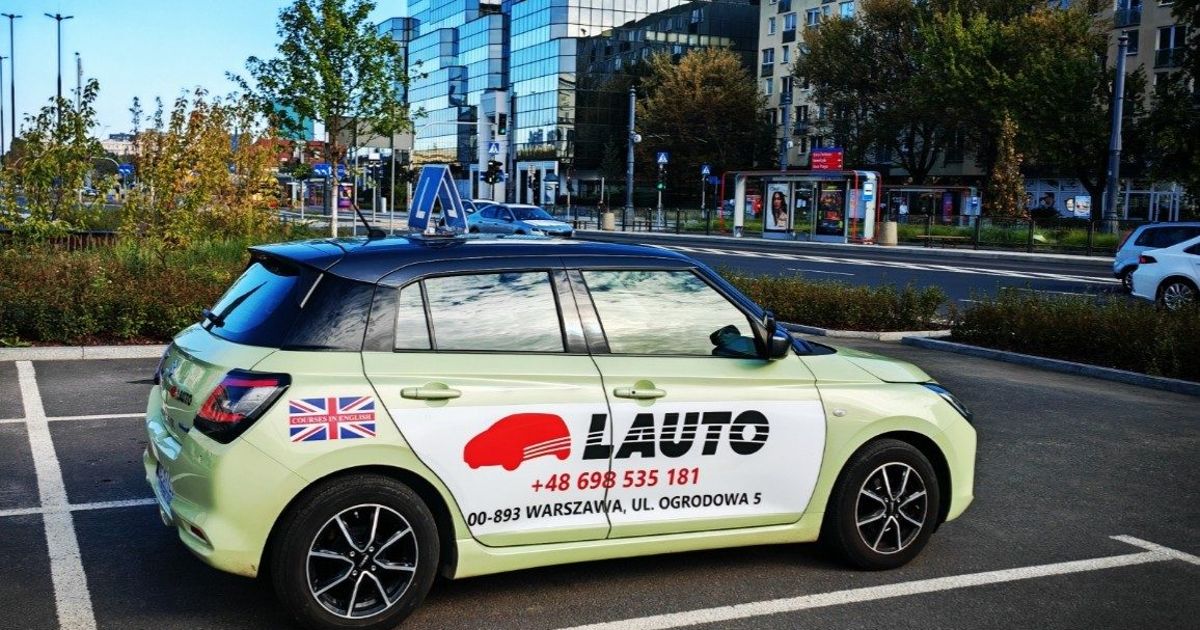
The stricter probationary rules make solid practical training more valuable than ever. OSK Lauto is a Warsaw driving school with English-speaking instructors, online theory and lessons on the real exam routes of WORD Bemowo and WORD Odlewnicza.
- Enrol online in English — /en/sign-up
- See courses — /en/courses
- See pricing — /en/pricing
- Find us and read reviews — /en/location
Learn to drive in English
Category B courses in Warsaw with English-speaking instructors, online theory and flexible lesson times.
Enroll online